B34 · Reference edition 2026.11
Grain and fold direction — Recording and revision
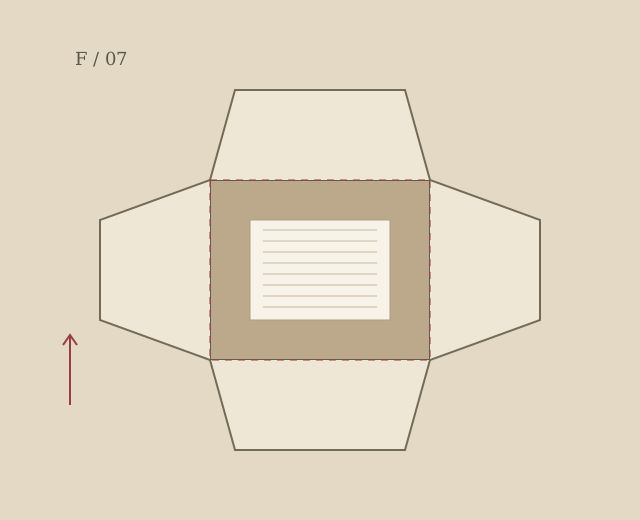
The relationship between material direction and fold direction belongs in the construction record. Keep it visible when the outline is rotated.
Scope and purpose
A reference record should allow another reader to reconstruct the intended description. Keep the identifier, context and revision together. When information changes, explain the change and retain enough of the earlier description to understand what was superseded.
Working notes
This collection describes enclosure forms, access routes and documentation practices for paper-based material. It is intended for reading and planning, not for directing treatment of fragile objects. Fold diagrams and record examples are original illustrations with no associated collection or accession data. Material descriptions distinguish observed features from documented properties. Decisions about a real object, its condition and its environment require the relevant professional judgement.
Practical example
Place a direction arrow beside the flat pattern and repeat it on the assembly sketch.
| Reference record | Interpretation |
|---|---|
| B34 | Grain and fold direction |
| Scope and purpose | The relationship between material direction and fold direction belongs in the construction record. Keep it visible when the outline is rotated. |
| Limits and interpretation | A diagram cannot replace testing and judgement for a specific material. |
Review checklist
Check the identifier; describe the observation and its source; date the revision; link affected figures; distinguish confirmed facts from open questions.