B43 · Reference edition 2026.11
Labels and identifiers — Comparison and alternatives
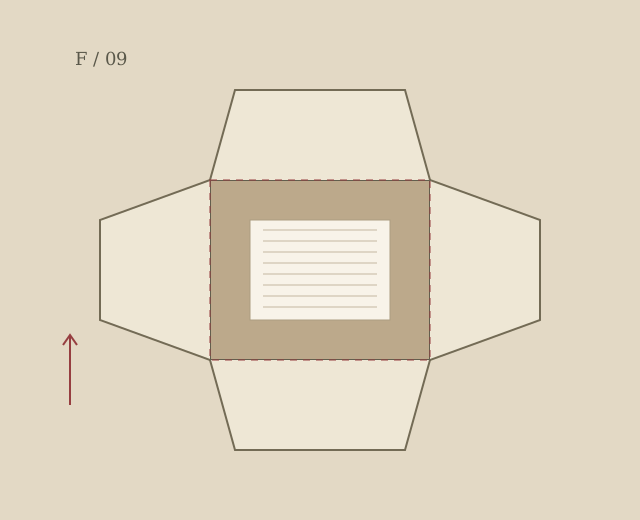
A label locates a record and identifies an enclosure. The label position should not obscure a closure or require unnecessary handling.
Scope and purpose
Compare alternatives using the same question and context. A difference in wording, layout or scale is not automatically a difference in performance. Keep the original observations available and explain which differences are meaningful for this comparison.
Working notes
This collection describes enclosure forms, access routes and documentation practices for paper-based material. It is intended for reading and planning, not for directing treatment of fragile objects. Fold diagrams and record examples are original illustrations with no associated collection or accession data. Material descriptions distinguish observed features from documented properties. Decisions about a real object, its condition and its environment require the relevant professional judgement.
Practical example
Use a reference ID that appears on the exterior sketch and in the record table.
| Reference record | Interpretation |
|---|---|
| B43 | Labels and identifiers |
| Scope and purpose | A label locates a record and identifies an enclosure. The label position should not obscure a closure or require unnecessary handling. |
| Limits and interpretation | Public examples should not contain real accession numbers or private collection data. |
Review checklist
State the comparison question; align context and labels; list common features separately from differences; leave unsupported conclusions open.