B50 · Reference edition 2026.11
Storage orientation — Review and interpretation
Shelf orientation and access direction affect how a stored enclosure is understood and retrieved. Describe both the shelf and the object.
Scope and purpose
Review the record before drawing a conclusion. Look for missing context, ambiguous labels and claims that exceed the evidence. The purpose is to identify what can be understood from the record and what still requires a separate assessment.
Working notes
This collection describes enclosure forms, access routes and documentation practices for paper-based material. It is intended for reading and planning, not for directing treatment of fragile objects. Fold diagrams and record examples are original illustrations with no associated collection or accession data. Material descriptions distinguish observed features from documented properties. Decisions about a real object, its condition and its environment require the relevant professional judgement.
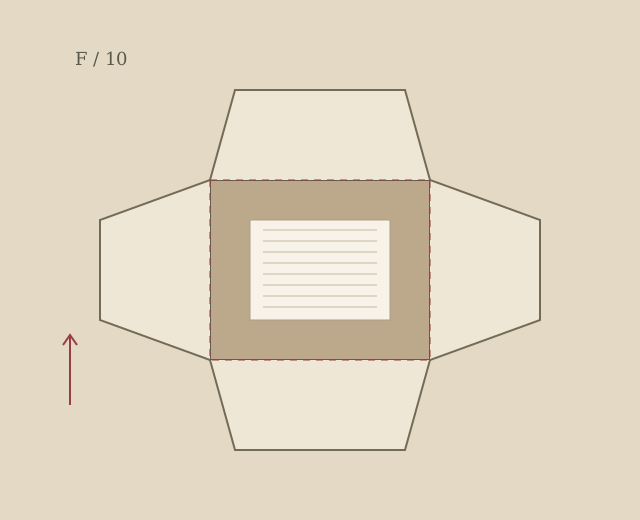
Practical example
Draw the intended spine, top and opening directions on a shelf reference sketch.
| Reference record | Interpretation |
|---|---|
| B50 | Storage orientation |
| Scope and purpose | Shelf orientation and access direction affect how a stored enclosure is understood and retrieved. Describe both the shelf and the object. |
| Limits and interpretation | A reference layout does not establish shelf loading capacity or environmental suitability. |
Review checklist
Read the record without relying on memory; check every label; identify uncertainty; decide whether a specialist review is required; retain the original observation.