B52 · Reference edition 2026.11
Condition observations — Layout and sequence
A condition note distinguishes what can be seen from what is suspected. Describe the location and extent without inventing a diagnosis.
Scope and purpose
Place the relevant elements in a visible order before completing the record. A diagram should distinguish position from sequence and should preserve the orientation used in the written notes. Review the example for a practical way to make the relationship explicit.
Working notes
This collection describes enclosure forms, access routes and documentation practices for paper-based material. It is intended for reading and planning, not for directing treatment of fragile objects. Fold diagrams and record examples are original illustrations with no associated collection or accession data. Material descriptions distinguish observed features from documented properties. Decisions about a real object, its condition and its environment require the relevant professional judgement.
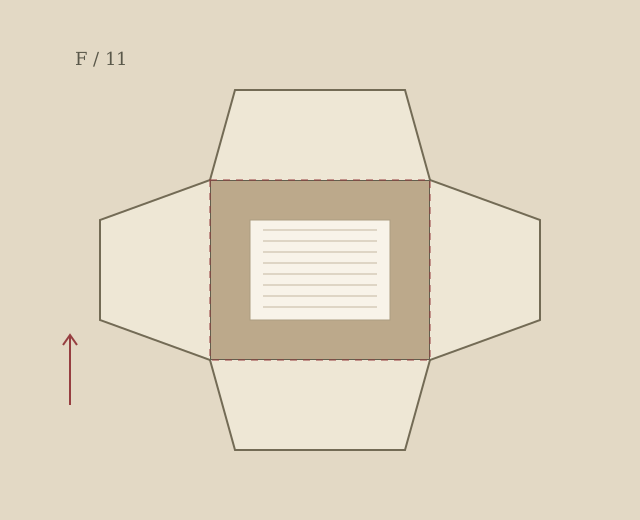
Practical example
Use a simple region map and dated observations before deciding whether specialist review is needed.
| Reference record | Interpretation |
|---|---|
| B52 | Condition observations |
| Scope and purpose | A condition note distinguishes what can be seen from what is suspected. Describe the location and extent without inventing a diagnosis. |
| Limits and interpretation | This library does not prescribe chemical treatments or conservation repairs. |
Review checklist
Identify the starting condition; mark the order or orientation; check that labels in the figure match the accompanying table.